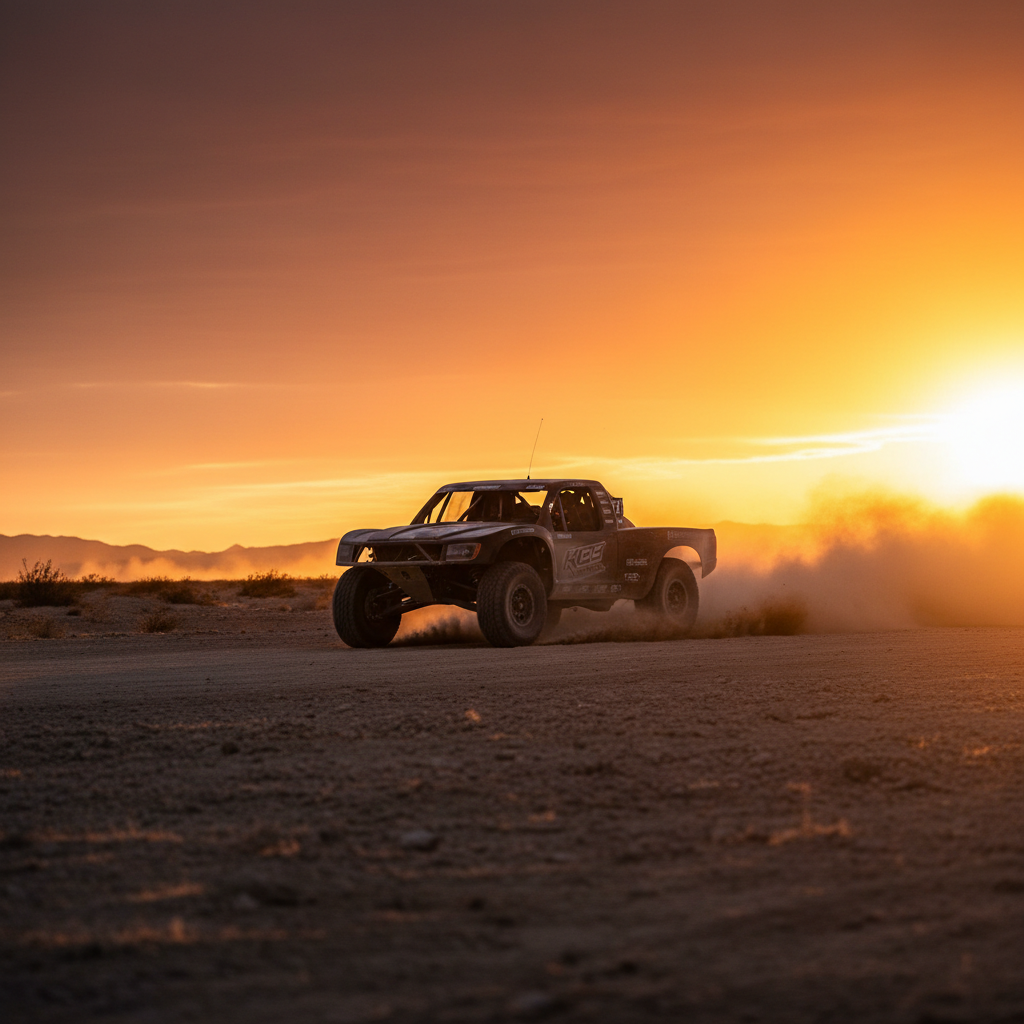
The simple yet profound statement, 'To Finish First, You Must First Finish,' resonates deeply within the off-road racing community, a mantra that echoes from the Baja Peninsula to the unforgiving terrains of Nevada. While the Performance Racing Industry (PRI) article, as referenced by news.google.com, likely touches upon this universal racing truth, its application in desert racing is particularly acute and often brutal.
Unlike circuit racing where a DNF can mean a quick tow back to the pits, a mechanical failure in the vast expanse of the desert can be catastrophic, costing hours, positions, or even the entire race. This isn't merely about having the fastest truck; it's about having the most resilient, meticulously prepared machine, supported by an equally resilient and prepared team.
Consider the legendary Baja 1000. It's not uncommon for a Trophy Truck to lead for hundreds of miles, only to succumb to a broken driveline, a blown shock, or a fatigued component just miles from the finish line. The top teams, like those fielded by Rob MacCachren, Bryce Menzies, or Luke McMillin, understand this implicitly. Their success isn't solely built on horsepower, but on thousands of hours of prerunning, meticulous chassis tuning, advanced metallurgy in critical components, and a chase crew that can execute lightning-fast repairs under immense pressure.
Suspension systems, for instance, are engineered not just for absorbing massive impacts but for enduring them for 1000+ miles. Engines are built for sustained high-RPM abuse in extreme temperatures. Drivetrains are spec'd to handle immense torque loads over punishing terrain. Every bolt, every weld, every hose clamp is a potential point of failure, and the best teams leave nothing to chance.
Strategy also plays a crucial role. Knowing when to push and when to conserve, understanding the course's evolving conditions, and making intelligent tire choices can be the difference between a podium finish and a DNF. A driver might sacrifice a few seconds per mile early on to preserve the truck, knowing that consistency and survival will pay dividends in the later stages.
This fundamental principle, highlighted by the PRI, serves as a constant reminder that in desert racing, the ultimate victory often belongs not to the swiftest, but to the one who endures. It’s a testament to engineering, preparation, and the sheer grit required to conquer the world’s most challenging off-road races.